A combi (or combination) boiler is an efficient, all-in-one unit that manages both your central heating and hot water needs. It's a single, compact appliance that performs two functions simultaneously.
The advantage of a combi boiler is that it heats water directly from the mains, exactly when you require it. When you turn on a hot tap, the boiler activates immediately to provide hot water. This on-demand system eliminates the need for a separate hot water storage cylinder, which is why combi boilers have become the most popular choice for homes across the UK, if your in Wigan or Manchester get an instant quote for an upgrade. at
https://jjkgasservices.co.uk/free-boiler-quotation/
where reliable plumbing and heating solutions are essential.
The Essentials of a Combi Boiler
So, how does it all work in one box? Think of it like a coffee machine that can make an espresso or steam milk with the flick of a switch—it’s one appliance, but it performs two distinct tasks. A combi boiler operates on a similar principle, seamlessly switching between heating the water for your radiators and providing instant hot water for your showers and taps.
This dual-function design is its biggest selling point, especially when it comes to saving space. Because there's no need for a bulky hot water cylinder in an airing cupboard or a cold water tank in the loft, a combi boiler can free up a surprising amount of room. This makes it a perfect fit for smaller homes, flats, and anyone looking to reclaim storage space.
Another great benefit is water pressure. Since the boiler takes its water directly from the mains, you get to enjoy a strong, powerful shower. No more disappointing dribbles.
One of the main drivers behind their popularity is efficiency. Modern, A-rated combi boilers only heat the water you use, which cuts down on the energy wasted by keeping a full tank of water hot all day. This smart approach often leads to noticeably lower energy bills. You can learn more about how they stack up against other options like system and regular boilers to find the right fit for your home.
To give you a clearer picture, here’s a quick rundown of what a combi boiler offers.
Combi Boiler at a Glance
Feature | Description |
|---|---|
Heating & Hot Water | A single unit provides both central heating and on-demand hot water. |
On-Demand Hot Water | Water is heated instantly from the mains supply when a tap is turned on. |
No Water Tanks | Eliminates the need for a separate hot water cylinder or a cold water tank. |
Space-Saving | Its compact size is ideal for properties with limited space, like flats or small houses. |
High Efficiency | Modern models are highly efficient, heating water only when required, reducing waste. |
Mains Pressure | Delivers hot water at mains pressure for stronger showers and faster-filling baths. |
In short, a combi boiler offers a compact, efficient, and cost-effective way to manage your home's heating and hot water needs from one smart unit. We'll dive into more of the details next.
How a Combi Boiler Actually Works
Ever wondered what's really going on inside that white box on your wall? Think of a combi boiler less like a big, slow kettle and more like a high-tech coffee machine. It doesn't store a big tank of hot water; it heats it instantly, right when you need it.
This clever dual-purpose system handles both your central heating and your hot water, switching between the two jobs seamlessly.
When your thermostat senses the room is chilly, the boiler fires up and heats water that runs through a sealed loop of pipes to your radiators, keeping your home warm. Because it's a closed system, it's a very efficient way to manage your heating.
The real magic, though, happens when you turn on a hot tap. A key component called a diverter valve instantly detects the demand for hot water. It acts like a railway signal, redirecting the boiler's full heating power away from the radiator circuit and over to the hot water system.
The On-Demand Hot Water Process
At the heart of this on-demand system is the plate heat exchanger. This is where the magic really happens. Cold water straight from the mains flows through one side of the exchanger, while super-heated water from the boiler's primary circuit flows through the other.
The two flows of water never actually mix. Instead, the heat transfers incredibly quickly across the thin plates separating them, getting your tap water up to temperature in seconds before sending it on its way. It's this instant heating process that gets rid of the need for a separate hot water cylinder, which is why combis are such a great space-saving solution.
This combination of efficiency and a compact footprint is a major reason they've become so popular in the UK, making up around 80% of all domestic boiler sales. Their design simply makes sense for most modern homes. You can review more UK boiler statistics to see just how dominant they are in the market.
This simple diagram gives you a clearer picture of how all the parts work together.
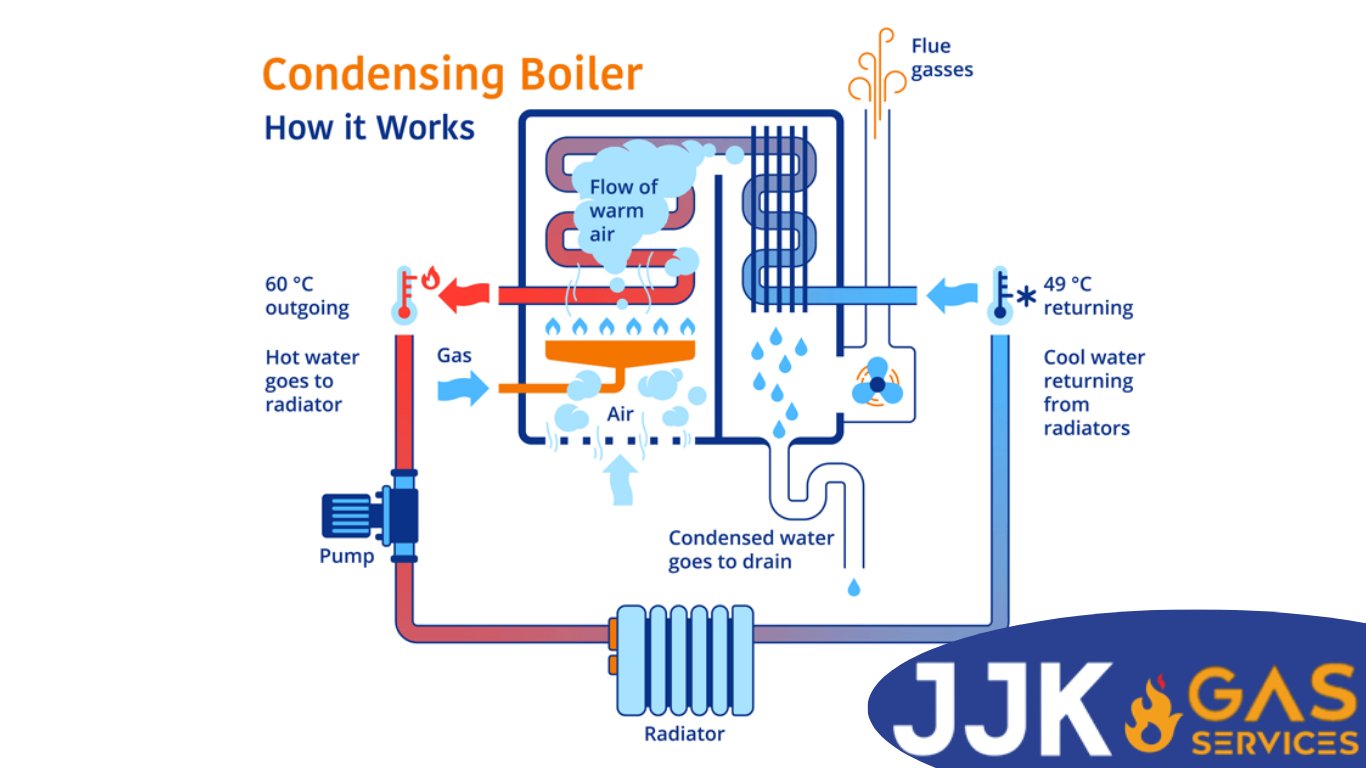
As you can see, the system is designed to prioritise hot water. The moment you turn on a tap, the boiler diverts all its energy to the heat exchanger to serve that need. For a more detailed breakdown of what's inside, our guide to boiler components takes a deeper dive.
Essentially, a combi boiler is always on standby, ready to provide either heating or hot water at a moment's notice. This intelligent system ensures you get hot water exactly when you need it, without wasting energy keeping a large cylinder of water hot around the clock.
What This Means for Your Home
So, we've looked at the mechanics, but what do all these features actually mean for you and your home? When you get down to it, the practical, day-to-day advantages are what really make a combi boiler such a popular choice across the UK.
One of the first things people notice is the sheer amount of space they get back. Old-school heating systems are bulky, needing a hot water cylinder in an airing cupboard and a cold water tank up in the loft. A combi boiler gets rid of both. Suddenly, you have a new cupboard for towels and bedding, or even a whole loft space to repurpose. For anyone living in a flat or a smaller house, this is a massive win.
Better Efficiency, Lower Bills
Here’s where it gets really good: combi boilers are incredibly efficient. Think about it—older systems have to keep a big tank of water hot 24/7, just in case you need it. That's a huge waste of energy. A combi, on the other hand, only fires up when you turn on a hot tap or the heating kicks in.
This smart, on-demand approach makes a real difference. Modern A-rated combi boilers are often over 90% efficient, which means very little energy is wasted. That efficiency has a direct impact on your wallet, leading to noticeably lower gas bills. You're not just upgrading your heating; you're making a smart financial decision that helps reduce your home's carbon footprint too.
By heating water only when you need it, a modern combi boiler can slash your home's energy consumption. In fact, swapping an old, inefficient G-rated boiler for a new A-rated model could save a typical household hundreds of pounds every year.
Hot Water That Never Runs Out
The other game-changer is the hot water itself. With a combi, you get a continuous supply of hot water straight from the mains. No more waiting for a tank to reheat or nervously listening for the hot water to run out halfway through a shower.
Because it comes directly from the mains, the water pressure is usually much better too. This means more powerful, invigorating showers and baths that fill up in no time. It's a simple luxury, but one you'll quickly wonder how you ever lived without.
Curious about how much you could save? The Energy Saving Trust's calculator is a great tool for estimating potential bill reductions. And if you’re ready to take the next step, our guide to professional boiler installation services can help you choose the right model.
When a Combi Boiler Might Not Be the Best Fit
Combi boilers are a fantastic bit of kit for a huge number of UK homes, but I’ll be the first to tell you they’re not a silver bullet for every situation. Knowing their limitations is just as important as knowing their benefits; it’s the key to making sure you invest in a system that genuinely works for your family.
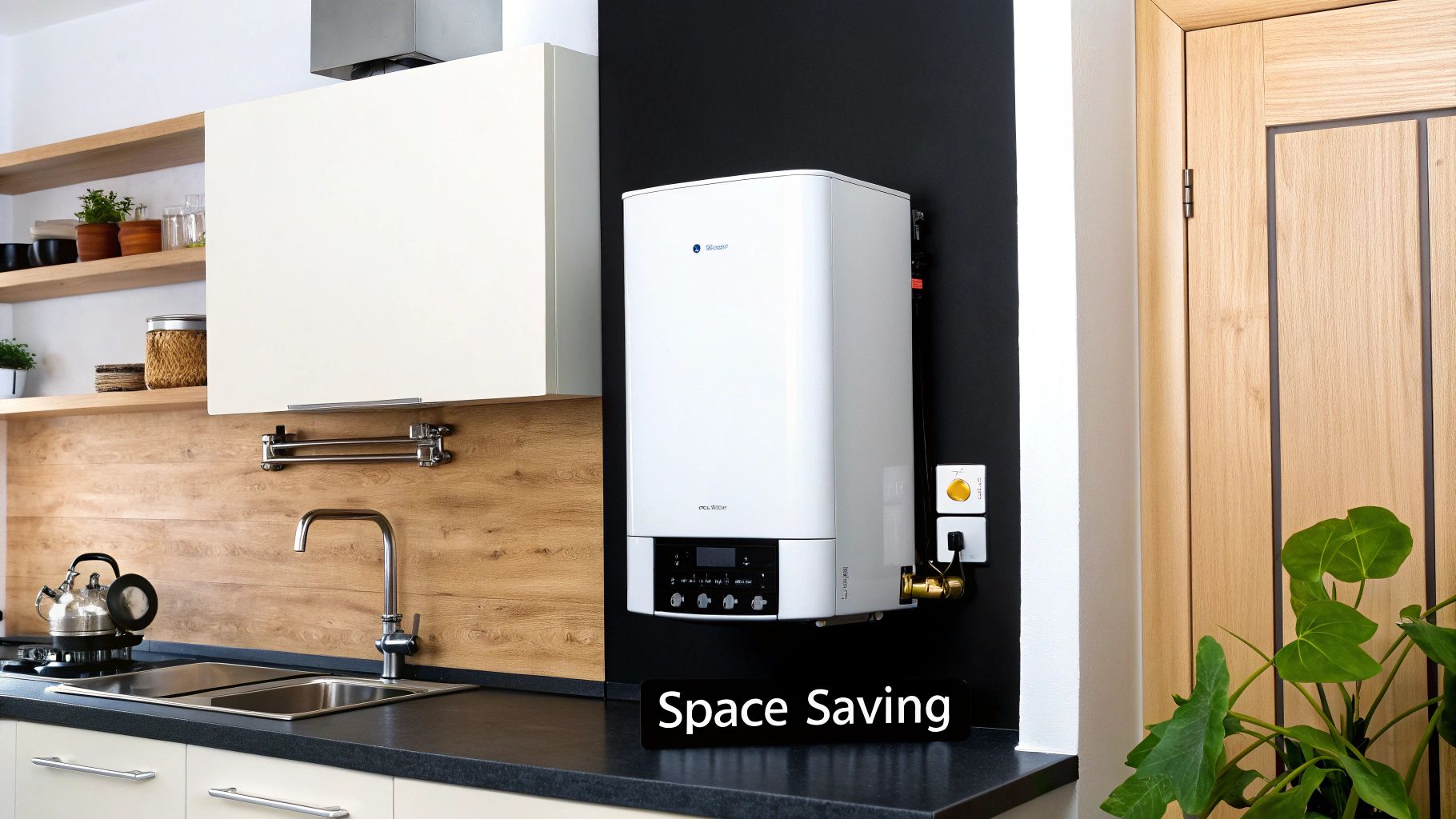
The biggest thing to consider is your household's demand for hot water. A combi boiler heats water directly from the mains, right when you need it. This means its flow rate has a ceiling. If you try to run two showers at the same time, or have the washing machine on while someone’s washing up, you'll likely see the water pressure drop for everyone.
This is why a combi often isn't the go-to choice for larger homes with several bathrooms, especially if they're all in use during the morning rush. If the daily routine involves a scramble for multiple showers, a combi might struggle to keep everyone happy.
Homes with High Water Demand
Another small point to be aware of is the slight wait for the hot water to arrive. Because the boiler only fires up when you turn on a tap, it takes a few seconds for that lovely hot water to travel through the pipes to you. It's usually not a long delay, but it's different from the instant heat you get from a system with a stored hot water tank.
For a busy household where multiple taps and showers are constantly running at the same time, a combi boiler might not deliver the powerful performance you need. In these cases, a system boiler, which works with a dedicated hot water cylinder, is almost always the better bet.
To make this crystal clear, I've put together a simple table comparing how each boiler type stacks up in different home scenarios. It's a great starting point for figuring out if a combi truly fits your lifestyle. Of course, for advice tailored to your specific property, our team at JJK Gas Services can give you a much more detailed assessment.
Combi vs System Boiler: Which Is Right For You?
Scenario | Combi Boiler Suitability | System Boiler Suitability |
|---|---|---|
Small to medium home (1-2 bathrooms) | Excellent – Compact and efficient for lower demand. | Good – Can be oversized for smaller homes. |
Large home (3+ bathrooms) | Limited – Struggles with multiple simultaneous uses. | Excellent – Designed to supply multiple taps at once. |
Need for powerful showers | Good – Relies on mains pressure. | Excellent – Cylinder provides strong, consistent flow. |
Limited storage space | Excellent – No tanks or cylinders needed. | Limited – Requires space for a hot water cylinder. |
Choosing the Right Type of Combi Boiler
Deciding on a combi boiler is a great first step, but the real choice comes down to the fuel that powers it. While they all do the same job, the fuel source you choose has a huge impact on everything from your running costs to the installation itself. Getting this right is key to finding a boiler that’s a perfect match for your property.
For most UK homeowners, the decision is pretty straightforward. If your home is connected to the gas grid, a natural gas combi boiler is almost always the go-to option. They're efficient, the fuel is relatively cheap, and it’s piped directly to you. Simple and convenient.
But what if you're not on the grid? Don't worry, you're far from alone, and there are some excellent alternatives out there.
Options Beyond the Gas Grid
Millions of homes across the UK aren't connected to the mains gas supply, but that doesn’t mean you have to compromise on a powerful, efficient heating system. Here are the main contenders:
Oil Boilers: A really solid choice, especially for larger, more rural properties. The main thing to remember is that you'll need an oil storage tank installed somewhere on your property, which will need refilling by a supplier.
LPG Boilers: Standing for Liquefied Petroleum Gas, LPG offers performance that's very similar to natural gas. The fuel is stored in tanks on-site, and it's a popular pick for mobile homes or properties in more remote locations because it burns cleaner than oil.
Electric Combi Boilers: These are becoming increasingly popular, particularly for smaller homes and flats, or anywhere installing a traditional flue would be a nightmare. They're incredibly efficient at the point of use, whisper-quiet, and compact. The only catch is that electricity currently costs more than gas, so that's something to factor into your running costs.
The demand for efficient heating systems is driving steady growth in the UK boiler market. In fact, projections suggest the market will expand at a rate of about 4.5% annually between 2021 and 2026, largely thanks to the push towards net-zero targets. You can read more about these UK boiler market trends and how they affect you as a homeowner.
It's also worth keeping an eye on the future. Hydrogen-ready boilers are now becoming available. These are designed to work with your existing natural gas supply today, but they're built to be easily converted to run on 100% hydrogen down the line, which fits neatly into the UK’s long-term energy plans.
Picking the right fuel is half the battle; the other half is getting the size right. A boiler that’s too small will constantly struggle to keep up, while one that’s too big will just waste energy and money. To get it just right, it’s worth reading our guide on selecting the correct boiler size for your home.
Understanding Combi Boiler Costs and Installation
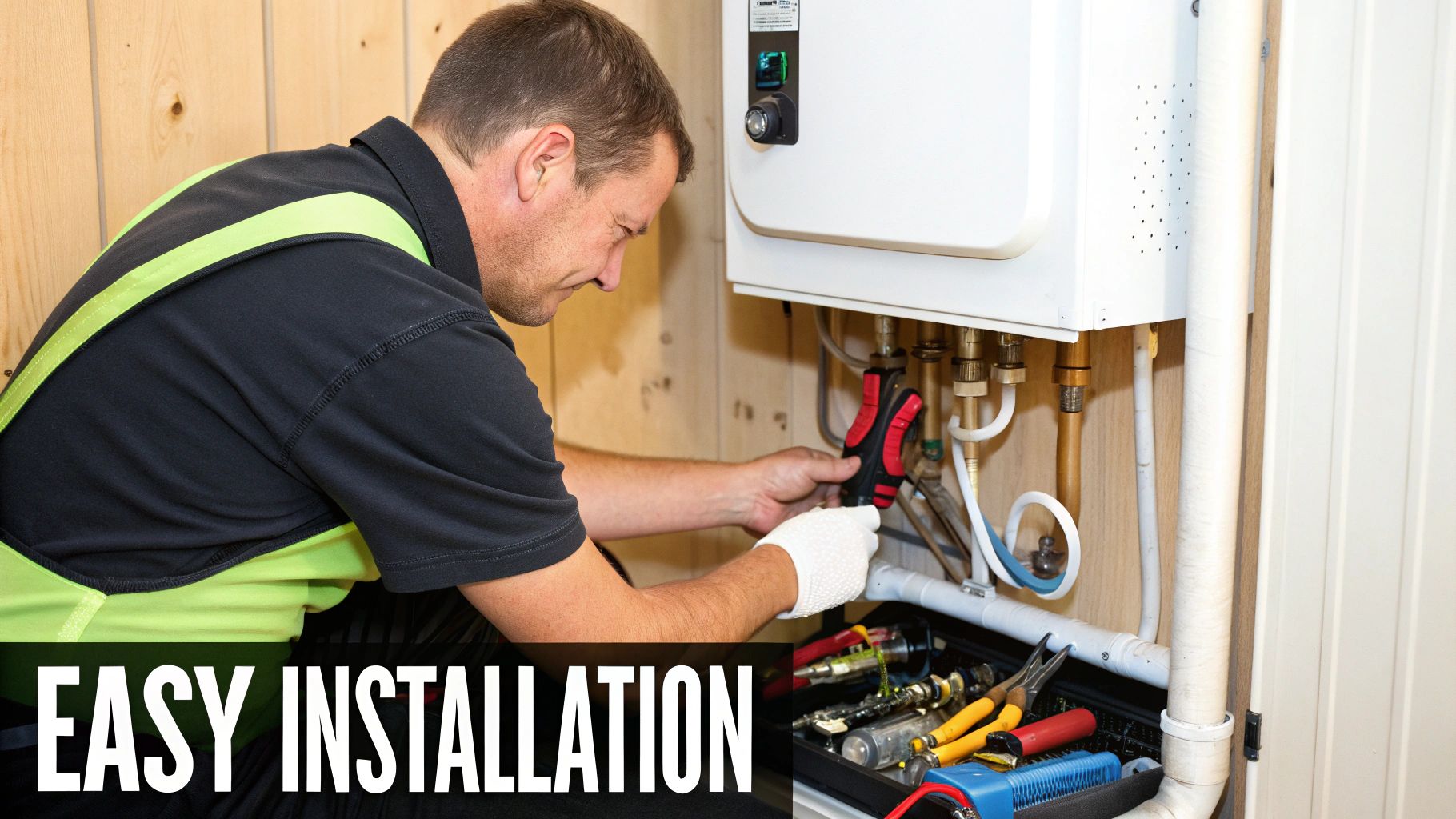
When you're thinking about a new combi boiler, it's easy to focus on the price tag of the boiler itself. But that's only half the story. The total cost is really a mix of two things: the boiler unit and the professional installation – and skimping on the second one is never a good idea for your home's safety and long-term efficiency.
The price of the boiler can swing quite a bit depending on the brand you choose, how long the warranty is, and its power output (measured in kW). In the same way, the installation costs aren't fixed. A simple, like-for-like swap in the same spot will always be cheaper than a more complex job, like moving the boiler to a new room or replacing old, tired pipework.
Breaking Down the Investment
So, what exactly goes into the final price you'll see on an invoice? It's worth getting your head around these key factors before you start calling engineers for quotes.
The Boiler Itself: High-end brands that offer longer warranties will naturally cost more upfront.
The Complexity of the Job: Relocating a boiler is a big job. It means running new pipework and fitting a new flue, which all adds to the labour time and cost.
Any Necessary System Upgrades: If you have an older home, your radiators or pipes might not be up to the task of working with a powerful, modern boiler. Bringing them up to standard will be an added expense.
All in, the cost for a complete combi boiler replacement, including the fitting, typically falls somewhere between £1,500 and over £5,000. The average in the UK tends to land around the £4,000 mark. It’s a significant investment, which is why thinking about boiler maintenance and insurance is so important for homeowners. For more on this, you can find some great insights into UK boiler ownership costs on Uswitch.com.
My best advice? Always get at least three detailed quotes from different installers. It’s not just about finding the best price; it helps you get a feel for who really understands your home's needs and offers the best service.
Finally, and this is non-negotiable, make sure your engineer is properly qualified. In the UK, any work on a gas boiler must be done by a Gas Safe registered engineer. It's easy to check. Just use the official Gas Safe Register search tool to find an accredited professional in your area. This is your guarantee that the job will be done safely and correctly.
Your Combi Boiler Questions Answered
To wrap things up, let's go through some of the most common questions we hear from homeowners across the UK. Getting these queries sorted can make all the difference when you're deciding if a combi is right for your home.
How long do they last?
A well-looked-after combi boiler from a quality brand should give you a good 10 to 15 years of service. The real secret to hitting that lifespan, and maybe even stretching it further, is regular professional maintenance.
An annual service by a Gas Safe registered engineer isn't just a recommendation; it's essential for keeping your boiler running safely, efficiently, and reliably for the long haul.
Are they powerful enough for a big house?
This is a big one. People often worry that a combi won't keep up with the demands of a larger property. While it's true that standard models are a perfect match for smaller homes, there are now some seriously powerful, high-capacity combi boilers on the market. These are built specifically for larger houses with a greater need for hot water.
However, there's a tipping point. If your morning routine involves two or more showers running at once, you’ll likely be better off with a system boiler and a separate hot water cylinder. That kind of setup is designed from the ground up to supply high-pressure hot water to multiple taps at the same time without any drop in flow. You can explore how these different systems stack up in our boiler advice section.
Do combi boilers actually save you money?
In most cases, yes, they absolutely do. Modern A-rated combi boilers are incredibly efficient—often over 90%—because they heat water precisely when you turn on the tap. This on-demand approach cuts right down on the wasted energy you get from a traditional hot water tank, which is constantly losing heat to keep water warm.
Switching from an old, inefficient G-rated boiler to a new combi can make a huge dent in your annual energy bills. It's an investment that pays off for both your wallet and the environment. For a deeper dive into boiler efficiency, the Energy Saving Trust is a fantastic resource.
At JJK Gas Services, we specialise in helping homeowners find the perfect heating solution. If you have more questions or need a professional installation in the Wigan area, visit us at https://www.jjkgasservices.co.uk.
Article created usingOutrank